
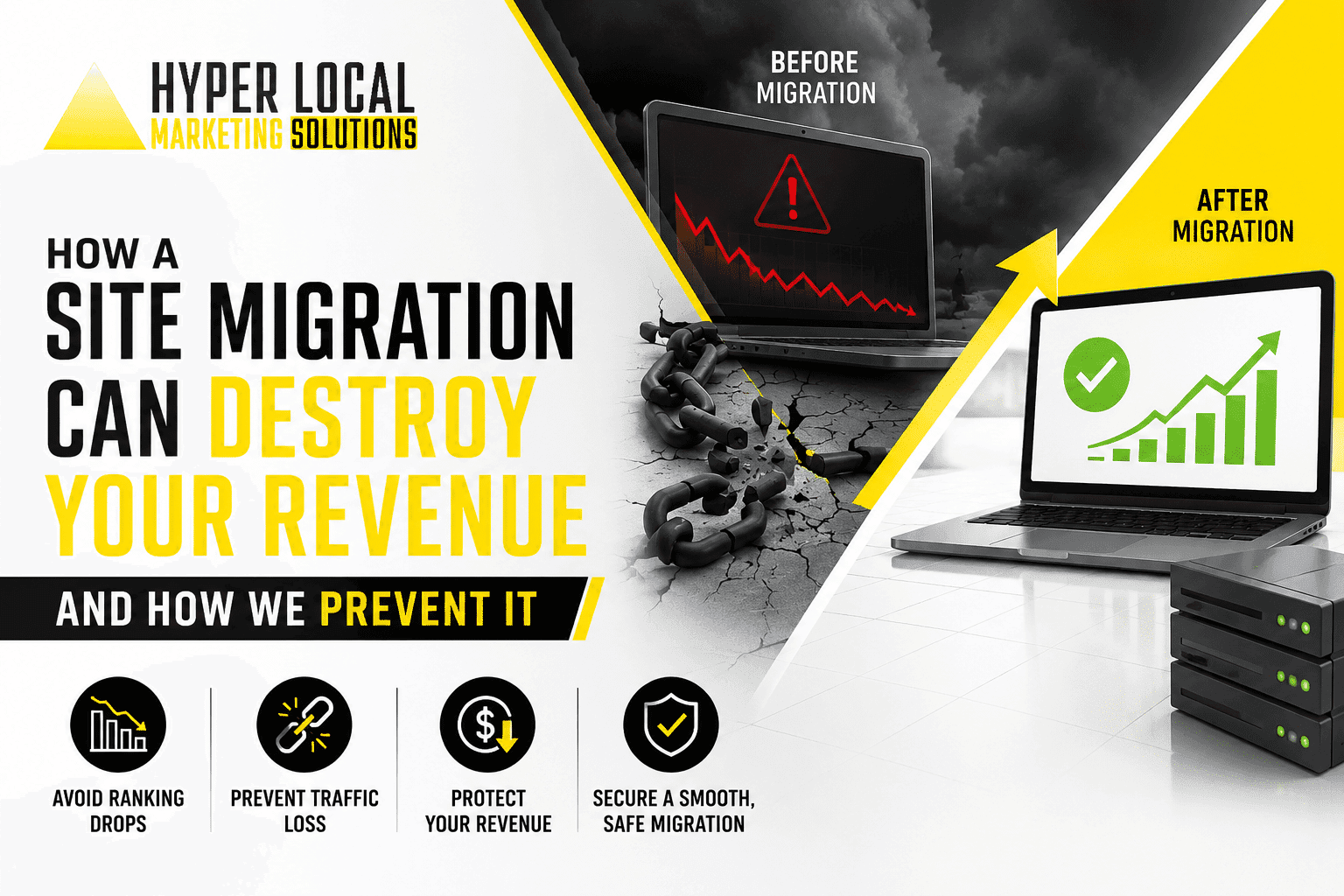
Most business owners approach a website migration with excitement. A new design, a better platform, faster load times, a cleaner user experience. The decision makes sense on paper and the new site looks great in the staging environment. Then it goes live, and within a few weeks the organic traffic numbers start dropping. Rankings that took years to build disappear from the first page. Phone calls slow down. Form submissions dry up. Revenue takes a hit that nobody saw coming.
This scenario plays out more often than the web development industry likes to admit. Site migrations are one of the most technically complex things you can do to an existing online presence, and when they're handled without proper SEO planning, the damage can take months or years to fully recover from — if it's ever fully recovered at all.
For Indian business owners in McKinney and Celina who have spent years building their online visibility in one of North Texas's fastest-growing corridors, this kind of avoidable setback hits particularly hard. The South Asian business community here has invested significantly in establishing digital presence to reach both the growing local Indian population and the broader McKinney and Celina market. Losing that ground to a poorly executed migration is not a minor inconvenience — it directly affects customer acquisition, community visibility, and revenue at a time when competition in the area is intensifying.
Why Migrations Go Wrong So Consistently
The core problem is that most migrations are treated as design and development projects rather than SEO projects. The technical team focuses on how the new site looks and functions, which is understandable, but the elements that search engines use to rank and index your content get disrupted in ways that aren't visible in a browser preview.
- URL structures change without proper redirects in place
- Internal linking gets broken during the move
- Page titles and meta descriptions get reset to defaults or stripped out entirely
- Site speed suffers on the new platform
- Canonical tags point to the wrong versions of pages
- Crawl budgets get wasted on duplicate content the migration accidentally created
Any one of these issues can cause ranking drops. Several of them happening simultaneously — which is common in a poorly planned migration — can effectively erase years of SEO progress in a matter of days.
What a Migration Looks Like When It's Done Right
Protecting your rankings through a migration requires planning that starts well before the new site is built and continues well after it goes live.
- Pre-migration audit: record every URL that currently ranks, drives traffic, or earns backlinks
- Compare new site architecture against existing structure and plan redirects in advance
- Methodically review and transfer all technical SEO elements — don't assume they'll carry over automatically
- Post-launch monitoring: crawl errors, indexing issues, and unexpected ranking drops need to be addressed quickly in the first 30–90 days
Custom website development at Hyper Local Marketing Solutions is built around this kind of SEO-integrated approach. A new site shouldn't just look better than what it's replacing. It should perform better across every metric that matters — including search visibility, page speed, mobile usability, and structured data implementation. These aren't features that get added after the build. They're foundational to how the site gets built in the first place.
The SEO Strategy That Protects What You've Built
A new website is only valuable if people can find it. That means the SEO strategies that drove your existing traffic need to be preserved, carried over, and ideally improved through the migration process rather than sacrificed for the sake of a cleaner design.
For Indian-owned businesses in McKinney and Celina specifically, organic search is often the single most important channel for reaching new customers in the community. A family looking for an authentic Indian grocery store, a parent searching for a Desi tutoring center, or someone trying to find a trusted Indian financial advisor in the area is almost certainly starting that search on Google. Losing those rankings even temporarily has consequences that go beyond traffic numbers and land directly on the bottom line.
The businesses that come through migrations without losing ground are the ones that treated SEO planning as a core part of the project from day one rather than a cleanup task after launch. Reach out to Hyper Local Marketing Solutions before your next migration and make sure your rankings are protected from the start.